Schedule A Call Now
A New York Sexual Abuse Lawyer For Survivors
Over 50 Years Experience \\ Get Help 24/7
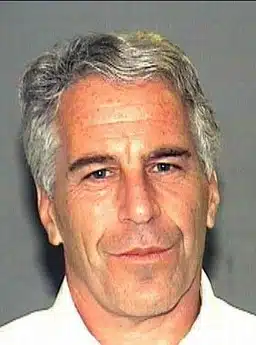
Source: Palm Beach County Sheriff's Department
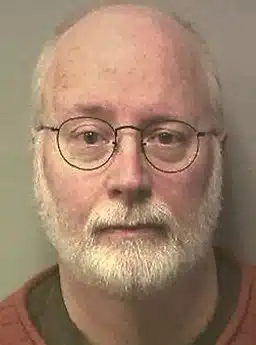
Source: United States Federal Government

Source: Weill Cornell Medicine
If the priest who abused you has died, your right to seek justice does not automatically disappear. Many survivors assume that a criminal case or civil claim becomes impossible when the abuser is no longer alive, but that is not always true. In fact, in many situations, the focus shifts from the individual abuser to the institution, supervisors, and other responsible parties that allowed the abuse to happen, concealed it, or failed to protect children and vulnerable adults.
That distinction matters. Survivors often carry a second burden after the abuse itself: the fear that time, death, or silence has erased accountability. It has not. A deceased abuser cannot be arrested, sued personally in the same way, or face a courtroom confrontation, but the broader legal and healing process may still be available. The facts must be examined carefully, because whether a claim can move forward depends on several issues, including timing, available evidence, the survivor’s age at the time of abuse, and whether there are viable claims against churches, dioceses, schools, parishes, or other organizations.
At The Abuse Lawyer NY, the goal is to help survivors understand the options that remain, even when the individual offender is gone. Our team’s clergy abuse practice is built around listening carefully, investigating thoroughly, and identifying every potential path to accountability. If you are looking for a starting point, you can review our sexual abuse law firm focused on survivor justice and accountability to understand how these cases are approached with care and attention. You can also explore our clergy abuse representation for survivors seeking answers and justice for a deeper look at how clergy abuse claims are handled. For those who need to understand the broader process for filing a claim, our sexual abuse lawsuit guidance for survivors and families explains how civil cases are developed and pursued.
When a priest dies, the most obvious consequence is that a criminal prosecution against that person becomes impossible. But civil accountability is different. Civil claims often involve financial responsibility, institutional negligence, and failure to act on warning signs. If a church entity, leadership structure, or affiliated organization knew or should have known that the priest posed a danger, that entity may still be answerable for the harm caused. That is why survivors should never assume that the abuser’s death means the case is over.
Many clergy abuse cases are built on patterns, not just one person’s conduct. A dead priest may have left behind records, prior complaints, reassignment history, internal correspondence, or testimony from other survivors. Those materials can show that the abuse was not a one-time lapse but part of a larger pattern that institutions ignored or concealed. Even when the abuser is unavailable to testify, the surrounding evidence can remain powerful.
Survivors may also be eligible to file claims against an estate in some circumstances, although that can depend on the facts, timing, and applicable procedural rules. More often, the stronger path is to examine whether institutional defendants can be pursued. A careful case review can identify whether there are insurance coverage issues, document retention concerns, prior notices, or other facts that support a claim even after the offender’s death.
Evidence remains central, and in many cases, it becomes even more important when the accused priest is no longer alive. The inability to question the abuser directly means the case must be pieced together from every available source. That can include the survivor’s own account, contemporaneous notes, counseling records, church records, prior complaints, witness statements, diaries, letters, emails, photographs, and documents uncovered through investigation.
Older abuse cases often benefit from a trauma-informed approach to proof. Survivors should not be expected to remember every detail in perfect order, especially when the abuse happened during childhood or under conditions of fear, shame, grooming, or spiritual manipulation. Consistency, corroboration, and context can matter more than rigid precision. A skilled lawyer will know how to identify the most persuasive evidence and present it in a way that reflects how abuse actually affects memory and disclosure.
It is also important to preserve any physical or digital material that may still exist. Even a small detail, such as a message to a friend, a note written years ago, or a program from a religious event, can help place the abuse in context. Survivors should not discard old records simply because they seem minor. Many cases are strengthened by small pieces of evidence that confirm timing, access, authority, or opportunity.
Often, yes, but the answer depends on several legal questions. The most important issues are whether the claim is timely, whether any revival window or extended limitation rule applies, and whether there is a defendant with legal responsibility beyond the deceased priest. Civil claims are typically handled differently from criminal matters, and many survivors are surprised to learn that institutions can still be sued years later, even if the individual abuser has died.
The key issue is not simply whether the priest is alive. It is whether someone else had a duty to protect the survivor and failed in that duty. Potential claims may include negligent supervision, negligent retention, negligent hiring, failure to investigate, concealment, and breach of fiduciary or custodial responsibilities. In some cases, claims may also involve failure to warn, failure to report, or intentional concealment of abuse patterns.
A survivor should not try to guess whether a claim is still possible based only on elapsed time or the abuser’s death. The rules can be technical, and there may be facts that reopen or preserve a claim that seems closed on the surface. A confidential consultation can clarify whether there is still a path forward and what information is needed to begin.
Many survivors are troubled by the fact that a priest may have died before any public disclosure, arrest, or conviction. That can create the impression that there is no official recognition of the harm. But a civil case does not require a criminal conviction. It requires proof that is sufficient under civil law, which is a different standard.
This is especially important in clergy abuse cases, where institutional secrecy, fear of retaliation, and the survivor’s age often delay disclosure. A priest can be deceased, never charged, and still have caused significant harm that can be proved through testimony and records. Courts and insurers often understand that the absence of a criminal conviction does not erase a survivor’s experience.
In many cases, the absence of a conviction makes investigation more important, not less. Records may need to be requested from religious institutions, archival sources, law enforcement repositories, treatment providers, or prior civil cases. A legal team experienced in clergy abuse matters knows how to pursue these channels methodically and how to identify patterns that support the claim.
Institutions can be responsible in several ways. They may have assigned the priest after warning signs, moved him after complaints, failed to conduct adequate background checks, or created an environment that protected reputation over safety. In some cases, an organization’s internal handling of complaints may be as important as the underlying abuse itself.
Survivors frequently discover that their story is not isolated. There may be prior allegations, other victims, or evidence of repeated misconduct. If an institution ignored reports, minimized concerns, or allowed the priest to continue access to children or vulnerable adults, that conduct may create liability regardless of the priest’s death. The institution’s decisions can be the central issue in the case.
Understanding this is often empowering. It shifts the survivor’s focus away from the impossible task of making a dead person answer and toward the more practical question of who had power, knowledge, and responsibility at the time. That is where meaningful accountability may still exist.
Missing records are common in older abuse cases. Files may have been destroyed, relocated, sealed, or never kept properly. That does not necessarily prevent a claim. It does, however, increase the importance of alternative proof.
Alternative proof may include survivor testimony, witness accounts, clergy assignment histories, public announcements, counseling notes, and prior lawsuits or complaints. It may also include patterns showing that the priest had access to children in a setting where abuse could occur repeatedly. A legal team can also investigate whether records were lost intentionally or whether an institution has a practice of restricting disclosure.
When documents are scarce, the survivor’s narrative becomes even more important. That does not mean a survivor must tell the story perfectly. It means the story should be developed carefully, with attention to chronology, sensation, setting, authority, and the ways grooming can obscure later recall. Compassionate legal representation is especially valuable in these circumstances.
Investigation begins with the survivor’s account, but it rarely ends there. A thorough case review may include a detailed interview, a review of available records, identification of witnesses, and a timeline reconstruction. From there, the legal team may search for prior complaints, public references, or documents showing the priest’s role and access within the institution.
If a priest has died, an investigation may also focus on the circumstances surrounding the death, any public notices or obituaries, archived institutional files, and whether there were warning signs that should have been acted upon years earlier. The objective is not to sensationalize. It is to establish the chain of responsibility and identify every party that may have contributed to the harm.
Survivors should expect a careful and trauma-informed process. Good lawyers do not demand that a survivor relive everything all at once. They build the case step by step, explaining what matters and why. That approach respects both the survivor’s well-being and the legal realities of a claim involving a deceased abuser.
Yes. Even where a formal lawsuit may be complicated, reporting can still have value. It can create a record, support other survivors, and help uncover institutional patterns that might otherwise remain hidden. Some survivors report wanting a paper trail. Others report because they want answers or because they hope to prevent further abuse.
Reporting can also assist with healing. Many survivors feel silenced for years, especially when the abuser is a respected clergy member. Telling the truth, even privately through counsel, can be an important step. The point is not to force disclosure before someone is ready, but to understand that reporting may still serve a purpose beyond litigation.
In some cases, one survivor’s report triggers additional claims or uncovers corroborating evidence from others. A deceased priest cannot be disciplined or removed from ministry, but institutions can still be compelled to confront what happened. That process can matter for survivors who want acknowledgment, not just compensation.
Depending on the facts, survivors may seek compensation for therapy, medical expenses, emotional distress, pain and suffering, lost income, and other damages related to the abuse. In some cases, compensation may also reflect the long-term consequences of trauma, including anxiety, depression, relationship difficulties, sleep disturbance, or disruptions to work and education.
Compensation is not a measure of the survivor’s worth. It is a legal way to acknowledge harm and place responsibility where it belongs. Many survivors say that no amount of money can undo what happened, and that is true. But civil recovery can help cover the cost of needed care and also force institutions to confront the cost of their failures.
In cases involving deceased clergy, the available source of recovery may depend on whether there is insurance coverage, an institution with assets, or an estate that can be pursued. These questions should be assessed early. An informed attorney can tell you whether compensation is realistically available and what evidence would make the case stronger.
Clergy abuse often occurs in systems, not in isolation. A priest may have been one actor in a larger environment that rewarded silence, deferred to hierarchy, or discouraged complaints. When a priest dies, that broader system remains. The institutions that employed, supervised, and protected him may still have records, responsibilities, and legal exposure.
This is why survivors should think beyond the individual. The question is not only, “Can I sue the priest?” It is also, “Who knew?” “Who should have known?” “Who had the power to stop it?” and “Who allowed it to continue?” Those are often the questions that determine whether a path to accountability still exists.
For many survivors, this broader view is deeply validating. It acknowledges that the harm was not just personal misconduct but an institutional failure. That recognition can be the beginning of a more honest and complete legal process.
If you are wondering what to do after learning that the priest who abused you has died, start with safety and support. You do not need to decide everything at once. The first step is usually to talk with a lawyer who handles clergy abuse cases and who can review the facts confidentially. A careful review can determine whether there is a viable civil case, whether any deadlines may still allow action, and what evidence should be preserved immediately.
You may also want to speak with a therapist or advocate who understands trauma. Legal decisions are easier when you are supported emotionally. It is okay to move slowly. It is okay to ask questions. It is okay to want both justice and privacy.
The most important thing is not to assume that death ends accountability. It often does not. There may still be a way to pursue truth, obtain recognition, and hold institutions responsible for what they allowed to happen.
Often, yes. The priest’s death may prevent a criminal prosecution against that individual, but it does not necessarily prevent a civil case. Many survivors pursue claims against the institution that employed, supervised, or protected the priest. Those claims may involve negligent supervision, failure to act on warning signs, concealment, or other misconduct. The strongest next step is to have the facts reviewed so you can determine whether there is still a viable path forward. A lawyer can assess whether deadlines, evidence, or institutional responsibility make a case possible even after the priest has died.
No. Compensation may still be available if another responsible party can be pursued. In many clergy abuse cases, the important legal question is not whether the priest is alive, but whether an organization failed to protect the survivor. If there is insurance coverage, an estate, or an institution with legal liability, compensation may still be possible. The amount and type of recovery depend on the facts, the available defendants, and the harm caused. Even when the abuser is deceased, a case can still create a path to financial support for treatment, pain and suffering, and other losses.
You may still have a claim. Many survivors do not report abuse right away because they were children, frightened, manipulated, ashamed, or confused. Delayed disclosure is common in clergy abuse cases. The legal system recognizes that survivors often need years to understand what happened and feel safe speaking up. Your ability to move forward may depend on timing and the available legal rules, but the fact that you did not report earlier does not automatically end your case. A trauma-informed lawyer can help evaluate your options without judgment.
Yes, in many cases, you can still move forward. Lack of documents or witnesses does not automatically defeat a claim. Survivors often rely on their testimony, counseling records, church records, public information, and other circumstantial evidence. In older cases, missing records are very common, and experienced lawyers know how to investigate around those gaps. A good case does not always begin with perfect proof. It begins with a credible account and a careful effort to gather any remaining evidence. The investigation may reveal corroboration you did not know was available.
Yes. Institutional responsibility is often the heart of these cases. If the organization knew about the priest’s abuse, ignored complaints, transferred him, failed to supervise him, or otherwise placed children and vulnerable people at risk, it may still be liable even after the priest’s death. These claims can focus on the organization’s own conduct, not just the priest’s actions. That is one reason survivors should not assume that a dead abuser means no case exists. The institution may remain a legally responsible party with records, witnesses, and insurance coverage.
You can still pursue a civil claim in many situations. A criminal case and a civil case use different standards. A lack of criminal charges does not mean the abuse did not happen, and it does not mean a civil case is impossible. Civil claims focus on whether the survivor can prove the abuse and whether another party is legally responsible. Many clergy abuse survivors never saw criminal charges filed, especially where the abuse happened years earlier. That does not erase the truth of the harm or the possibility of legal action.
Not necessarily. Many cases resolve without a survivor ever having to face the abuser, particularly if the priest is deceased. Even when a claim moves forward, much of the work is done through investigation, documentation, and negotiation. If testimony is required, your lawyer can prepare you carefully and advocate for protections. The process should be handled in a trauma-informed way that respects your comfort level. A good attorney will explain what is likely to happen, what is optional, and where your choices matter most.
Deadlines can be complicated and depend on the facts, your age when the abuse occurred, and the legal rules that apply. Because time limits can change and different claims may have different deadlines, it is important to get legal advice as soon as possible. Do not assume the passage of time automatically prevents action, but do not wait to find out either. A lawyer can review whether any filing window remains open and whether a claim against an institution, estate, or insurer may still be available. Timing is one of the most important issues in these cases.
Yes, if and when you feel ready. Reporting can create a record, help uncover patterns, and sometimes assist other survivors. But it is also okay to start with a private legal consultation or counseling support. You do not have to choose between healing and action all at once. Many survivors begin by speaking confidentially with a lawyer to understand the options and then decide whether to report, file, or simply preserve evidence for later. The right pace is the pace that feels safest and most manageable to you.
Bring whatever you have, even if it seems incomplete. Notes, dates, names, old messages, therapy records, church information, and any memory of who else may have known can all be helpful. If you have no documents, that is still okay. A consultation is a chance to tell your story and let a lawyer identify what should be investigated next. The most important thing is to be honest about what you remember and what you do not. That helps the legal team build the case carefully and realistically.
If the priest who abused you has died, you may still have legal options, and you are still entitled to answers. The abuser’s death can make the case more complex, but it does not necessarily end the possibility of accountability. In many instances, the institution that employed or protected the priest remains the central focus, and the evidence may still be strong enough to support a claim.
You do not need to have every answer before reaching out. You do not need perfect documents, perfect memory, or a perfect timeline. What you need is a careful review of the facts by a lawyer who understands clergy abuse cases and treats survivors with respect. If you are ready to explore your options, taking that first step can help you move from uncertainty to clarity and from silence to accountability.
Thomas Giuffra, Esq. - The Abuse Lawyer NY
551 5th Avenue, 29th Floor,
New York, NY 10017
(646) 413-6394
Hours Of Operation
Monday: 24 Hours
Tuesday: 24 Hours
Wednesday: 24 Hours
Thursday: 24 Hours
Friday: 24 Hours
Saturday: 24 Hours
Sunday: 24 Hours
Cases We Handle
Sexual abuse lawyer
Child abuse lawyer
Clergy abuse lawyer
Private boarding school abuse lawyer
Doctor abuse lawyer
Daycare abuse lawyer
Hazing and Bullying abuse lawyer
Massage spa abuse lawyer