
New York sexual abuse lawyer
What happened to you may still be something you can act on.
Talking to a lawyer costs nothing and commits you to nothing. You do not need a police report. You do not need a conviction. You do not need to have told anyone before now.
- Free
- Confidential
- No police report required
- No conviction required
- 31 years in practice in New York
- NY bar 2646065 · admitted 1995
- ABOTA Advocate · 28 in New York City
- No fee unless there is a recovery

New York bar registration 2646065 · admitted 1995
“Is it too late, and will anyone believe me?”
That is the question we are asked more than any other, and it is usually asked by someone who has already decided the answer is no. It often isn't.
A civil case is not a criminal case. Nobody has to be arrested, charged or convicted for you to bring one. You do not need to have gone to the police at the time, or ever. What a civil case asks is different: whether an institution (a school, a diocese, a hospital, an agency, an employer) failed in a duty it owed you, and what that failure cost you.
Deadlines in New York depend on how old you were, who was responsible, and the specific facts. Some claims that people assume are long gone are not. Rather than guess, ask. It is a free call and it commits you to nothing.
The person who would handle your case
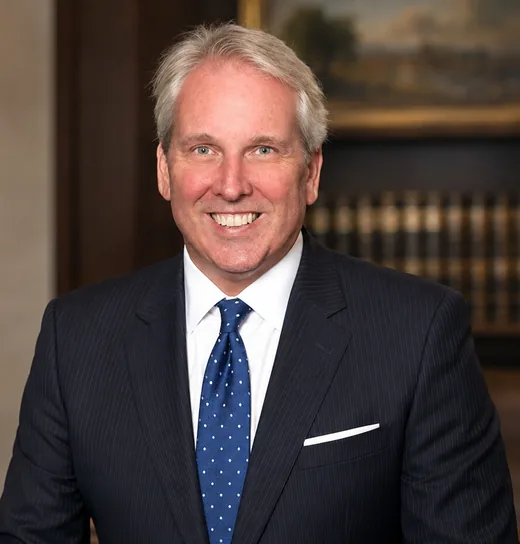
Thomas P. Giuffra
Partner, Rheingold Giuffra Ruffo Plotkin & Hellman LLP · Leads the firm's Sexual Abuse & Civil Litigation department
- Advocate, American Board of Trial Advocates (ABOTA): a rank that requires serving as lead counsel in more than 50 jury trials to verdict. 28 lawyers in New York City hold it.
- Barrister, Order of Centurions: membership requires more than 100 jury trials to verdict.
- Fellow, International Society of Barristers: fewer than 700 members worldwide.
- Works alongside a psychotherapist, so clients have support through the process rather than only legal representation.
Most abuse cases settle. That is not automatically a bad thing, but the terms of a settlement depend a great deal on whether the institution across the table believes your lawyer is willing and able to try the case. That is what these credentials are for. They are not decoration; they are leverage, and the leverage is yours.
Cases you will have heard of
Mr. Giuffra has represented survivors in claims arising from some of the most widely reported abuse cases in the country, including matters involving Harvey Weinstein, Sean “Diddy” Combs, Jeffrey Epstein, Dr. Robert Hadden and Dr. Darius Paduch.
The reason that matters to you is not the headlines. It is that cases of this kind are defended by very well-resourced institutions and their insurers, and they are the cases where an opponent's willingness to go the distance is tested hardest. This is familiar ground rather than unfamiliar ground.
Described here as professional experience only. Every case is decided on its own facts, and prior results do not guarantee a similar outcome.
What actually happens if you contact us
Nothing is set in motion by asking a question. Here is the whole sequence, so there are no surprises in it.
-
You speak to a person
Not a form, not an intake script. You do not have to describe what happened to you in order to have the conversation, tell us as much or as little as you want. If you would rather not say your name yet, that is fine too.
-
We look into who had a duty
This is our work, not yours. Which institution was responsible, what it knew, what records exist, and whether a claim can still be brought. It costs you nothing and you are not committed to anything while we do it.
-
You decide
We tell you plainly what we think is possible and what it would involve. Then you choose. If you decide not to go ahead, that is the end of it, and what you told us stays confidential either way.
-
If you go ahead, we carry it
Filings, deadlines, records, dealing with the institution and its insurers. There are steps that can be taken to protect your identity in the court record, and we explain those before anything is filed. Most cases resolve without our client ever being in a room with the person who harmed them.
Where the abuse happened shapes the case
Different settings mean different institutions, different duties and different evidence. Find the one closest to your situation, each page explains who can be held responsible and what a claim actually involves.
-
Clergy and church abuse
Abuse by a priest, pastor, rabbi or other faith leader, and the institution that moved them.
-
Doctors and hospitals
Abuse during an examination or treatment, and the hospital or practice that credentialed them.
-
Therapists and counsellors
Abuse by a licensed mental-health professional, and the practice that supervised them.
-
Foster care
Abuse in a foster placement or group home, and the agency that placed and monitored the child.
-
Daycare and childcare
Abuse at a daycare, nursery or after-school programme.
-
Teachers and schools
Abuse by a teacher, coach or staff member, and the district that kept them in place.
-
Campus and Title IX
Assault at a college or university, and the school's handling of the report.
-
Sex trafficking
Trafficking claims, including against hotels and businesses that profited.
Why institutions, and not only individuals
Almost every case we take involves an organisation that had a duty to the person in its care and did not meet it. In practice that failure usually looks like one of these:
- Negligent hiring: someone was brought in without the checks that would have surfaced a history.
- Negligent supervision: an adult was left alone with children in circumstances the organisation should never have allowed.
- Negligent retention: a complaint was made, and the person stayed.
- Failure to report: staff who were legally required to report a suspicion did not.
This matters for a practical reason: institutions keep records. Personnel files, prior complaints, transfer histories and internal correspondence often show that someone knew. That evidence exists whether or not there was ever a police report, and it is frequently what a case turns on.
New York institutions have been through this before, several dioceses in the state have gone through bankruptcy proceedings arising from abuse claims, and school districts, hospital systems and youth organisations here have all faced civil actions. What that looks like in New York City.
Questions people ask before they call
Do I need to have reported it to the police?
No. A civil claim is separate from a criminal case and does not depend on one. You do not need to have made a report at the time, and you do not need to make one now. Many of the people we represent never reported.
Does someone have to have been convicted?
No. A criminal conviction requires proof beyond a reasonable doubt. A civil case uses a lower standard, and it is often brought against an institution rather than the individual. Cases proceed regularly where there was never a criminal charge.
It happened a long time ago. Is it too late?
It depends on your age at the time, who was responsible and the particular facts, so it is not something anyone can answer honestly from a web page. What we can say is that people frequently assume they are out of time and turn out not to be. Asking costs nothing.
Will my family or my employer find out?
Not from us. What you tell us is confidential from the first conversation, whether or not you go ahead. If you do bring a claim there are steps that can be taken to protect your identity in the court record, and we will explain those before anything is filed.
What does it cost?
Nothing up front. These cases are handled on a contingency fee, which means the fee is a percentage of a recovery and there is no fee if there is no recovery. The first conversation is free regardless of what you decide afterwards.
I am asking on behalf of someone else. Can I still call?
Yes. Parents, partners, siblings and friends contact us often. We can explain how this works so you can pass it on, and there is no obligation on the person involved to do anything.
Free, confidential case review
Two short steps. We ask only what we need in order to call you back, nothing about the abuse itself. You can tell us as much or as little as you want, whenever you want.